Over time, the natural crystalline lens of the eye can become clouded, which obstructs a person’s vision. This condition, known as cataracts, is part of the natural aging process, but can be treated with cataract surgery — a procedure that is one of the most common operations performed in modern medicine today. At Nevada Eye Consultants, our experienced cataract surgeons utilize the latest technology and techniques to ensure the highest level of patient safety, as well as unsurpassed outcomes.

Cataract Surgery
During cataract surgery, the eye’s natural lens is removed and replaced, effectively eliminating the cataracts, and preventing them from developing again in the future. Depending on your personal preferences, we offer several cataract surgery options that can meet your needs:
Personalized Laser Cataract Surgery
Using the RxSight™ Light Adjustable Lens (LAL), patients can undergo laser cataract surgery with vision optimization following their procedure. This is possible as the Light Delivery Device system sends UV light to adjust the implanted lens, allowing you and your surgeon to refine your final result. Through this process, our surgeons can better customize cataract surgery, providing qualified patients with the best possible vision.
Premium Laser Cataract Surgery
Patients with cataracts who wish to eliminate the need for corrective lenses can benefit from Premium Laser Cataract Surgery. Innovative Trifocal & Extended Depth of Focus (EDOF) IOLs allow for vision correction at both near and far distances (and everywhere in between). For enhanced precision in all of our Custom cataract surgery procedures, we utilize the LenSx™ femtosecond laser in place of a traditional blade during surgery. This, coupled with the use of the ORA™ System for real-time analysis and measurements during Premium Laser Cataract Surgery, allows for unmatched precision.
Custom Laser Cataract Surgery
With Custom Laser Cataract Surgery, patients are able to correct astigmatism and lessen their dependence on glasses or contact lenses. Through advanced technology and testing, as well as state-of-the-art Toric IOLs, we are able to treat cataracts, in addition to addressing refractive errors. Certain patients may also benefit from limbal relaxing incisions (LRIs) to further correct astigmatism. To optimize accuracy in our Custom cataract procedures, we perform surgery using the LenSx™ femtosecond laser, replacing the traditional technique of using a blade. This advanced technology, along with our advanced ORA™ System which performs real-time analysis and measurements, provides our patients with the best possible precision.
Standard Cataract Surgery
Covered (partially or fully) by Medicare and most insurance plans, this procedure replaces the clouded lens with a standard monofocal (single focus) intraocular lens (IOL). This procedure does not address any vision problems beyond the cataracts themselves, so corrective eyewear may still be needed after surgery.
Vision Preference Checklist
Not sure which option is right for you? Our Vision Preference Checklist can help us better understand your vision needs and goals, ultimately helping our surgeons to assist you in determining which option can best address your lifestyle and needs.
What To Expect
To ensure patient comfort throughout surgery, an anesthesiologist will administer a light sedative, as well as anesthetic eye drops prior to the procedure. The surgery itself typically does not take very long (usually only about ten to fifteen minutes), and is designed to be virtually painless. To remove the cataract, a small incision is made on the cornea. The surgeon will then utilize ultrasonic waves to break up the cataract, making it easy to remove. Once removed, the eye’s natural lens is replaced with an intraocular lens (IOL). Stitches are generally not needed, and the incision should close and heal naturally. Although the procedure itself is brief, patients should expect to be at the surgery center for approximately two hours, to allow for surgical preparation, as well as recovery. Patients should have a friend or family member drive them to and from surgery.
After cataract surgery, patients will be provided with medicated eye drops and protective shields for their eyes. Patients should be able to return home on the same day as their procedure, but may not be able to drive or perform certain tasks for at least one day. Recovery time can vary from person to person — healing is usually completed over the course of a few weeks following surgery, but slight vision improvement can often be seen as soon as the day after surgery. Vision will continue to improve as healing continues. To promote proper recovery, patients should be sure to follow any postoperative care instructions provided by their surgeon.
IOLs
Depending on your vision preferences, you may wish to lessen your dependence on glasses or contacts as part of your cataract surgery. Even if you do not have corrective eyewear currently, it is likely that you may need it in the future, as presbyopia is part of the natural aging process. To simultaneously address various eye conditions while treating cataracts, we offer we offer the Light Adjustable Lens (LAL), Trifocal/Extended Depth of Focus (EDOF) IOLs, and toric IOLs.
Light Adjustable Lens (LAL)
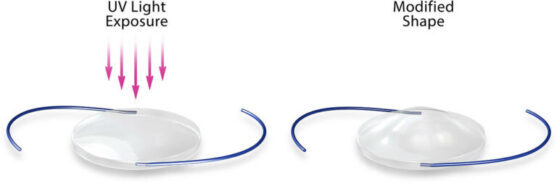
The Light Adjustable Lens is made of a special photo-sensitive material that changes the power of your implanted lens in response to UV light, increasing the likelihood that you will achieve your desired vision after cataract surgery. With the technology used during the light treatments, the Light Delivery Device (LDD) can adjust your vision to what you desire. The FDA-approved light adjustable lens available at our practice is the RxSight™ Light Adjustable Lens (LAL).
Trifocal/Extended Depth of Focus (EDOF) IOLs
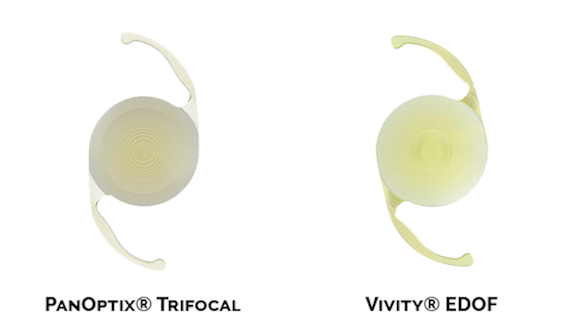
Trifocal & Extended Depth of Focus IOLs are designed to assist patients with near, far, and intermediate distance vision. Patients who receive these types IOLs as part of cataract surgery or refractive lens exchange (RLE) should be able to see clearly without the need for corrective lenses. Unlike monofocal IOLs, which focus light on a single point of the retina, trifocal and multifocal IOLs work to focus light on different parts of the retina. This feature allows the patient to clearly view images at varying distances. The FDA-approved trifocal and EDOF lenses available at our practice are the PanOptix® Trifocal IOL & the Vivity EDOF IOL. Our surgeons are skilled and experienced at placing these IOLs, and can discuss your individual needs and expectations with you to determine which IOL is most appropriate for you.
Acrysof® Toric® IOL
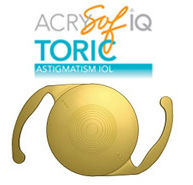 The AcrySof® IQ Toric IOL is used to treat cataracts in patients who also have astigmatism (standard cataract surgery using a monofocal IOL does not address astigmatism). These specialized IOLs can correct the effects of astigmatism, providing the patient with clear distance vision. Some patients may still require reading glasses for up-close vision after surgery. Patients who have extreme cases of astigmatism may benefit from limbal relaxing incisions, in addition to toric IOLs. Limbal relaxing incisions (LRIs) can often help patients to reduce or eliminate their dependence on glasses or contact lenses after cataract surgery. LRIs can be placed using the LenSx® femtosecond laser during laser cataract surgery, and will help to reshape the eye’s cornea, effectively correcting the astigmatism.
Cataract Surgery Technology
To ensure the best possible outcomes for our cataract surgery patients, we use only the most advanced surgical equipment. The RxSight® Light Delivery Device (LDD), LenSx® femtosecond laser and the ORA™ (Optiwave Refractive Analysis) System allow us to provide our patients with unsurpassed comfort and results.
Frequently Asked Cataract Surgery Questions
What is a Cataract?
The eye’s natural lens is clear, and allows light to pass through it to be focused on the retina. When cataracts are formed, the lenses become clouded, leading to blurred or distorted vision.
How Can I Tell if I Have Cataracts?
The most common symptoms of cataracts include cloudy or blurred vision, noticing that colors seem faded, difficulty seeing at night, and glare from bright light sources. Patients who have developed cataracts may also notice that corrective lenses are no longer effective.
How Are Cataracts Treated?
Cataract surgery is the only effective treatment for cataracts. During cataract surgery, the clouded natural lens is removed and replaced with an intraocular lens (IOL). Patients can select from a variety of IOLs based on their vision preferences.
What Causes Cataracts?
Aside from being a part of the natural aging process, it is not yet known what causes cataracts. However, some potential risk factors include diabetes, ultraviolet (UV) light exposure, smoking cigarettes, drug abuse, extensive alcohol consumption, and a family history of cataracts.
How Soon Can I Drive After Surgery?
Although you will need a friend or family member to drive you home after surgery, many patients are able to see well enough to drive within one day. Some patients may not be comfortable enough with their range of vision right away, and will typically wait a few days before they feel safe to drive again.
Will I Still Need Glasses or Contact Lenses After Surgery?
Standard cataract surgery does not address other vision problems. However, our Personalized or Custom Laser Cataract Surgery options can reduce or eliminate the need for corrective eyewear.
Learn More About Cataracts and Cataract Surgery
If you think you may be developing cataracts, or would like more information about cataracts and cataract surgery, please contact Nevada Eye Consultants today. Our friendly staff will be happy to answer your questions, and can assist you in scheduling a consultation with one of our surgeons for more personalized answers to your questions.